
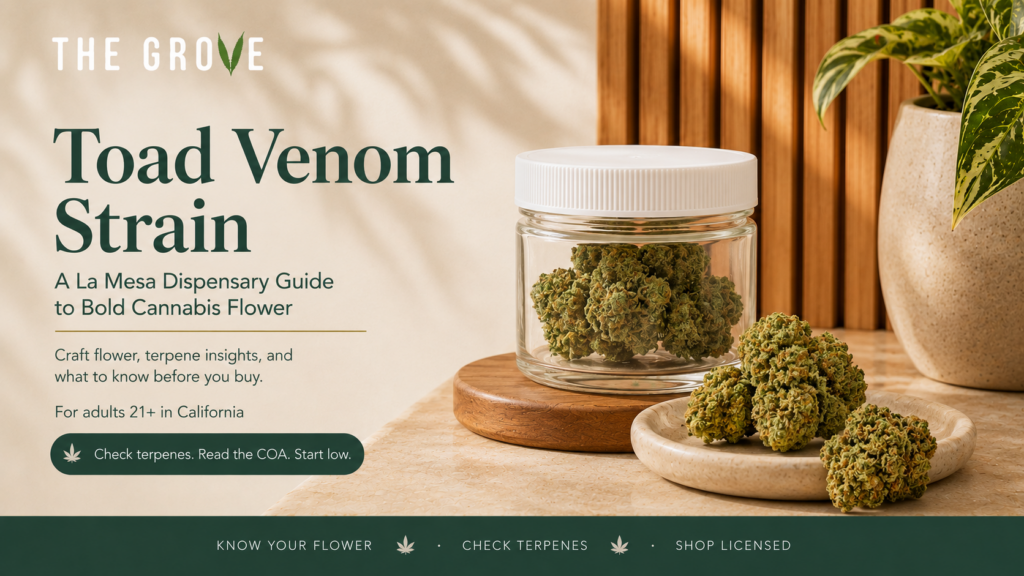
Toad Venom Strain: A La Mesa Dispensary Guide to Bold Cannabis Flower
Key Takeaways
- Toad Venom strain is a potent hybrid known for pungent, gassy aroma.
- Terpene content shapes your experience more than the indica or sativa label.
- Craft growers like Baba Ku Farms focus on small batches and slow cures.
- Every legal California flower batch carries a Certificate of Analysis.
- A La Mesa dispensary menu changes weekly, so check stock before you drive.
- Start low and go slow, especially with high-THC cannabis flower.
Cannabis Flower Is Back in the Spotlight
Some names stick with you. Toad Venom is one of them.
The strain has picked up steady buzz across San Diego County menus, and shoppers keep asking about it by name. That curiosity makes sense. Bold, gassy cultivars have a way of pulling people back to whole flower after years of chasing carts and gummies.
This guide breaks down what the Toad Venom strain actually is, how craft growers like Baba Ku Farms and Green Dragon approach cannabis flower, and how to read a label so you buy with confidence. You must be 21 or older to purchase adult-use cannabis in California. Valid medical patients 18 and older may also qualify with proper documentation.
If you want the deeper cultivar breakdown, our full Toad Venom strain review covers aroma, appearance, and what shoppers report.
Here is where most people get tripped up.
What Is the Toad Venom Strain?
Toad Venom belongs to the modern wave of pungent, high-THC hybrids. Growers and breeders describe it as heavy on funk. Think diesel, sharp citrus peel, and a savory edge that lingers in the jar long after you close it.
Lineage claims vary by breeder and by phenotype. That is common in cannabis, where the same name can travel across several cutting sources over the years. One grower’s Toad Venom may test very differently from another’s.
So the name gives you a starting point, not a guarantee.
What stays consistent is the reputation. Shoppers reach for Toad Venom when they want something loud. The buds usually appear dense and frosted, with dark green tones and heavy trichome coverage. The smoke tends to hit hard, which is why experienced consumers gravitate toward it.
Potency alone does not tell the whole story, though. The next piece matters just as much.
Why Terpenes Matter More Than the Label
Most menus sort cannabis flower into sativa, indica, and hybrid. Those words are easy shorthand. They are also a weak predictor of how a batch will actually feel.
Leafly’s own guide to indica, sativa, and hybrid cannabis types points out that these terms describe plant structure, not effects. Two flowers labeled indica can carry completely different chemistry.
Terpenes are the aromatic compounds behind that chemistry. Myrcene, limonene, caryophyllene, and terpinolene each bring their own smell and flavor. Researchers are still studying how these compounds interact with cannabinoids, and a 2024 comprehensive review of the entourage effect published in Pharmaceuticals found the evidence remains exploratory rather than settled.
That honesty is worth repeating. Science has not confirmed the entourage effect.
Still, terpene percentages give you a far better shopping signal than a colored dot on a menu. Ask your budtender for the terpene numbers. Then compare them to strains you already enjoy.
That habit changes how you shop forever.
Expert Insight: The Total Terpene Number Beats the THC Number
Budtenders see the same pattern every week. Customers reach for the highest THC percentage on the shelf, then come back disappointed. The flower burned harsh and felt flat. Meanwhile, a jar testing eight points lower in THC but well above 2% total terpenes gets rave reviews. Here is the insider read: total terpene content tracks closely with cure quality, harvest timing, and careful handling. Growers who rush a dry lose volatile terpenes to evaporation. So when two jars sit side by side, check the terpene line first. It quietly tells you how much care went into the batch.
How Craft Growers Like Baba Ku Farms Approach Flower
Small-batch cultivators run a different playbook than large-scale operations. They harvest less. They hand-trim more. They often cure for weeks instead of days.
Baba Ku Farms and Green Dragon both sit in that craft lane. Growers in this category tend to prioritize aroma retention and bag appeal over raw yield. You can usually smell the difference the moment you crack the jar.
Craft flower also costs more. That premium reflects labor, slower turnaround, and tighter selection at harvest.
Not every shopper needs that tier. Plenty of mid-shelf THC flower delivers a great session for less money. The point is knowing what you are paying for.
Once you know that, the label does the rest of the work.
How to Read a California Flower Label
Every legal batch in California passes through a licensed testing lab. The California Department of Cannabis Control requires labs to hold ISO/IEC 17025 accreditation and follow standardized methods. Products that fail testing cannot reach the shelf.
Use this quick reference when you shop.
|
Label Element |
What It Tells You |
What to Look For |
|
Total THC |
Overall potency by dry weight |
18% to 30% is typical for premium flower |
|
Total terpenes |
Aroma intensity and cure quality |
Above 2% often signals a careful grow |
|
Dominant terpene |
The flavor and aroma driver |
Match it to strains you already like |
|
Packaged date |
Freshness of the batch |
Fresher usually means better aroma |
|
Batch number |
Links the jar to its lab results |
Should match the COA you request |
|
License number |
Confirms legal, tested supply |
Required on all compliant packaging |
Ask for the Certificate of Analysis if you want the full picture. Licensed retailers can provide it.
That single request separates casual buyers from smart ones.
Shopping for THC Flower at a La Mesa Dispensary
Menus move fast. Craft drops sell out. A strain listed on Monday may be gone by Thursday.
The Grove La Mesa carries a rotating flower selection alongside concentrates, vapes, and edibles. Brands you may see include craft cultivators and established California growers, though availability shifts with each delivery. Call ahead or check the live menu before you make the drive.
The team at 8155 Center St. can also walk you through terpene profiles in person. That conversation beats guessing.
If you plan to consume, plan your evening too. The DCC’s responsible cannabis use guide recommends starting low and going slow with any product. Inhaled cannabis usually takes effect within minutes, so wait at least half an hour before adding more.
Sports fans, keep that timing in mind before a long game day.
Frequently Asked Questions
Is Toad Venom an indica or a sativa?
Is it typically listed as a hybrid on California menus. Lineage varies by breeder and phenotype, so the terpene profile on the label gives you a more useful signal than the category name.
Are high-THC strains always stronger?
Are they? Not necessarily. THC percentage measures potency by weight, but terpene content, freshness, and your own tolerance all shape the experience you actually have.
Is cannabis flower tested in California?
Is it required, yes. Licensed labs test every batch for potency and contaminants under Department of Cannabis Control rules, and failing batches cannot be sold at retail.
Are Baba Ku Farms and Green Dragon available at The Grove?
Are they on the menu? Availability rotates by delivery. Check the live online menu or call the La Mesa dispensary directly to confirm current stock before visiting.
Is a Certificate of Analysis available to customers?
Is it, yes. Licensed California retailers can share batch COAs on request. The document lists cannabinoid percentages, terpene results, and safety testing outcomes.
Are there purchase limits on cannabis flower?
Are there limits? Yes. Adult-use customers 21 and older may purchase up to 28.5 grams of non-concentrated cannabis per day under California law.
Wrapping It Up
Toad Venom earns its reputation on aroma and strength. The smarter takeaway goes beyond one strain, though. When you learn to read terpene numbers, packaged dates, and lab results, every jar on the shelf becomes easier to judge.
You stop guessing. You start choosing.
Cannabis products have not been evaluated by the FDA. This article is for informational purposes only and makes no medical claims. You must be 21 or older to purchase adult-use cannabis in California. Please consume responsibly, never drive after using cannabis, and store products away from children and pets. Talk with a licensed medical professional about your personal health questions before adding cannabis to your routine.
Come See What Just Landed
Good flower is easier to find when someone points you toward it. The Grove has served La Mesa as the area’s first licensed dispensary, and the team is happy to walk you through terpene profiles, lab results, and fresh drops without any pressure. Start with our Toad Venom strain and Green Dragon review, then check the live menu to see what is on the shelf today.